
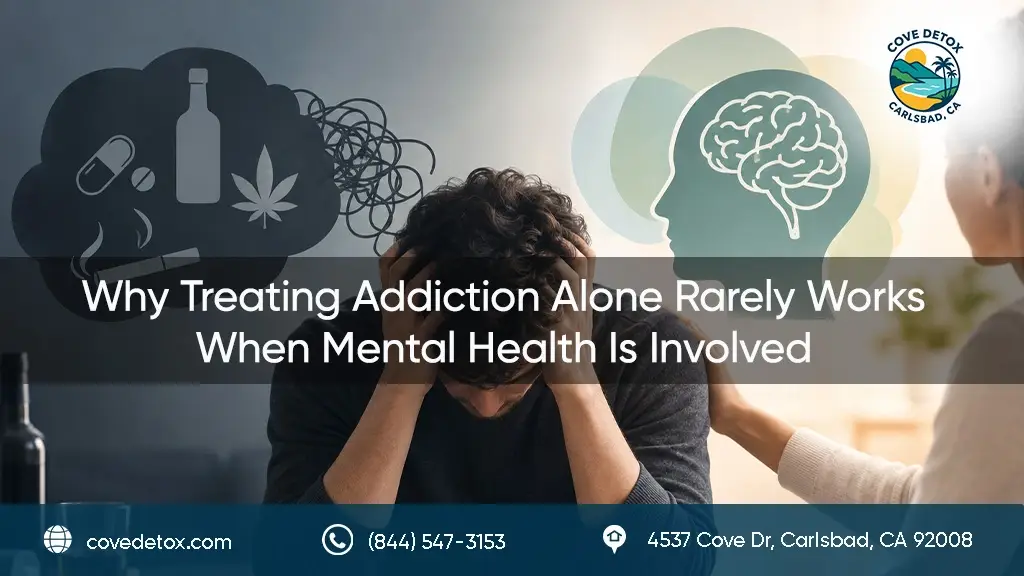
Dual diagnosis describes having a substance use disorder and a mental health condition at the same time. Depression, anxiety, PTSD, or bipolar disorder can show up alongside alcohol or drug use. The two conditions aren’t a coincidence sitting side by side. They tend to feed each other directly.
Someone with untreated anxiety might drink to quiet a racing mind. That relief works just well enough to become a habit. Someone with depression might use stimulants to feel something again. Over time, the substance stops being a side issue. It becomes its own separate problem, tangled up with the original condition.
It’s not always obvious which came first. That question matters less than people think. What matters is that both conditions stay active and keep reinforcing each other right now.
Why Treating Just One Side Falls Apart
A program built only around substance use can get someone through detox and early sobriety. But the underlying depression, trauma, or anxiety doesn’t disappear just because the substance did. It’s often still there. Now it’s missing the thing that had been, badly, managing it.
This is where relapse tends to start. A few common patterns show up again and again:
- Sobriety holds for weeks or months, then an untreated mental health symptom flares and old coping habits come right back
- Mental health treatment alone stalls out because active substance use keeps undermining medication or therapy progress
- Someone bounces between separate providers who never coordinate, so neither condition gets a full picture of the other
Sequential treatment means dealing with one condition, then the other. This tends to produce exactly this kind of gap. By the time the second condition gets attention, the first one has often already started slipping.
What Integrated Treatment Looks Like Instead
Co-occurring disorders treatment addresses both conditions at the same time. The same coordinated team handles everything, instead of passing someone between disconnected providers. That typically includes a few things working together:
- A combined assessment that looks at substance use and mental health as one connected picture, not two separate intake forms
- Therapy that addresses both conditions in the same sessions, rather than saving the “real” mental health work for after sobriety
- Medication management for the psychiatric condition, handled by someone who also understands the substance use history
- Group and family support that accounts for both sides of what’s actually going on
The goal isn’t just getting someone sober. It’s making sure the reason they started using in the first place actually gets addressed. That way, sobriety has something to stand on besides willpower.
Finding the Right Program
Not every treatment center runs integrated care well. A genuine dual diagnosis treatment California program should have psychiatric staff on-site. Or at least closely coordinated with the addiction team, not just a referral handed out after discharge. It’s worth asking directly how the program handles someone with both an active mental health diagnosis and a substance use disorder. Does the same clinical team manage both? Or do they get split into separate tracks that rarely talk to each other?
Recovery that only addresses half the picture tends to be temporary. Addressing both conditions together, in one coordinated plan, gives someone an actual foundation to build on. That beats a fragile sobriety propped up against an untreated condition still working against them.
Frequently Asked Questions
How do I know if I have a dual diagnosis?
A licensed clinician typically identifies this through a combined assessment. It covers both substance use history and mental health symptoms. If a mental health condition and substance use are both present and appear connected, that generally points to a dual diagnosis.
Which condition gets treated first?
Neither, usually. Integrated treatment addresses both conditions at the same time rather than in sequence. Treating one in isolation tends to leave the other free to undo the progress.
Can medication be used for both conditions at once?
Yes, when appropriate. Psychiatric medication for the mental health condition often gets managed alongside addiction treatment. Ideally, the same providers coordinate directly with each other.
Is dual diagnosis treatment more intensive than standard rehab?
It usually involves more coordination between providers and a broader treatment plan. The day-to-day experience, therapy, group support, and medical oversight tends to look similar to standard care. It’s just built around both conditions instead of one.
What happens if the mental health condition isn’t treated during rehab?
The untreated condition often resurfaces after treatment ends. This is one of the more common paths back to relapse.
Conclusion
Addiction rarely shows up alone. Treating it as if it does usually leaves the door open for relapse. At Cove Detox, treatment gets built around both conditions from day one. Psychiatric and addiction care stay coordinated by the same team, never split apart. If mental health and substance use have been feeding each other, that’s exactly what integrated care is designed to untangle. To know more about dual diagnosis treatment in California, Contact Cove Detox today!
